
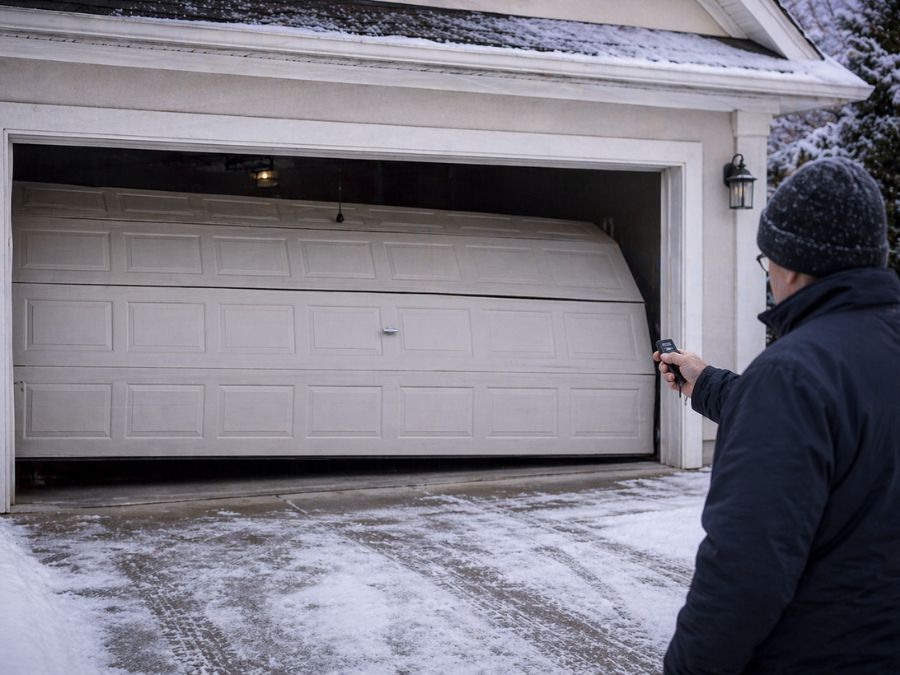
Why Does My Garage Door Open a Little and Then Stop in Cold Spring, MN?
Quick Answer:
A garage door that opens slightly and then stops is usually caused by a spring problem, excessive resistance in the system, or incorrect opener force settings. In Cold Spring, winter conditions make these issues more noticeable by increasing friction and reducing system efficiency.
In most cases, the opener is not the problem—it is reacting to something else going wrong.
Why Your Garage Door Stops After Opening a Few Inches
If your garage door starts to open but stops after just a few inches—or reverses before it fully lifts—it is not a random malfunction. It is the system doing exactly what it was designed to do: protect itself from damage or unsafe operation.
In Cold Spring, MN, this issue shows up frequently, especially during colder months. What feels like a frustrating inconvenience is usually an early warning sign that something in the system is struggling—most often related to weight imbalance, resistance, or cold-weather performance. Understanding why this happens is the key to fixing it before it turns into a complete failure.
What This Behavior Usually Means
| What the Door Does | Most Likely Cause | What It Tells You |
| Opens a few inches and stops | Weak or broken spring | Opener hums, but door barely moves |
| Starts opening, then reverses | Resistance in tracks | The door is too heavy to lift |
| Opener hums, but the door barely moves | Loss of counterbalance | Spring failure likely |
| Works inconsistently | Cold-weather friction | System under seasonal stress |
Garage door systems rely on balance. When everything is working properly, the springs carry nearly all of the door’s weight, allowing the opener to lift it smoothly with minimal effort.
When something disrupts that balance—whether it is a failing spring or increased resistance—the opener senses the added strain. Modern openers are designed to stop immediately when they detect this, preventing motor damage or safety issues.
That is why the door may only open a few inches before stopping. It encounters resistance right away, and the system shuts down before forcing the movement any further.
The Most Common Causes in Cold Spring, MN
Weak or Failing Springs
This is the most common cause, especially in colder climates like Cold Spring.
A spring does not always fail all at once. In many cases, it weakens gradually, losing its ability to fully support the door’s weight. When that happens, the opener begins to lift the door but quickly encounters resistance and stops.
Cold temperatures accelerate this process. As metal contracts, internal tension increases, making springs more likely to fail during winter—especially when combined with corrosion from moisture and road salt near the Sauk River corridor.
Cold Weather Friction and System Stiffness
Cold weather affects every moving part in your garage door system.
Lubricants thicken, rollers stiffen, and metal components contract slightly. This creates additional resistance throughout the system, particularly along the tracks and hinges. In Cold Spring, it is common for a door that works perfectly in the fall to struggle during the first deep freeze.
That added resistance is often enough to trigger the opener’s safety stop early in the opening cycle.
Track Resistance or Obstruction
Garage door tracks need to remain clean and properly aligned for smooth operation.
During winter, snow, ice, dirt, and road salt can build up inside the tracks. Even a small obstruction can prevent rollers from moving freely, creating resistance that stops the door from opening fully.
This is one of the most common seasonal issues in Cold Spring and is often overlooked during quick troubleshooting.
Incorrect Opener Force Settings
Garage door openers are calibrated to stop when they detect resistance beyond a safe limit.
If the force settings are too low, the opener may stop even when the door is only slightly harder to lift than normal. This becomes more noticeable during colder months when natural resistance increases across the system.
However, this is where many homeowners make a costly mistake. Turning up the force setting may seem like a quick fix, but it does not solve the underlying problem—it only hides it.
Expert Warning: Do NOT Just “Turn Up the Force.”
It is very common for homeowners to try increasing the force setting on the back of the opener when the door stops early.
This is not a real fix—and it often makes the problem worse.
If the door is stopping because the spring is weak or the system is under strain, increasing the force simply pushes the opener to work harder against that problem. Over time, this can strip the opener’s internal nylon gears, overheat the motor, or lead to a complete system failure.
A good way to think about it is this: it is like pressing harder on the gas pedal while your car’s parking brake is still on. You might get movement temporarily, but you are damaging the system in the process.
Worn Rollers and Hardware
Over time, rollers and hardware wear down and lose efficiency.
Instead of rolling smoothly, worn rollers begin to drag along the track, increasing friction. In Cold Spring, exposure to moisture and salt accelerates this wear, especially on older metal components.
This added resistance is often enough to trigger the opener’s safety stop early, even if the rest of the system is still functional.
The Cold Spring Factor: Why This Happens More Often Here
Garage door issues like this are more common in Cold Spring because of the local environment.
Cold temperatures increase tension in springs and stiffness in moving parts, while humidity from the Sauk River and surrounding lakes introduces moisture that leads to corrosion over time. This creates a cycle where components weaken gradually and then fail during cold snaps.
Whether your home is near St. Boniface or along County Road 2, these environmental pressures are consistent and directly affect how your garage door performs.
How to Diagnose the Problem Quickly
You can usually narrow down the cause in just a few minutes with a simple manual test. Start by disconnecting the opener using the red emergency release cord so you can test the door itself. Try lifting the door by hand from the bottom. A properly balanced door should feel relatively light and move smoothly. If it feels extremely heavy right away or drops quickly when lifted halfway, the spring is likely the issue, and the door has lost its counterbalance.
If the door moves but feels rough, jerky, or uneven, the problem is more likely related to friction in the system. Pay attention to whether it sticks at certain points or feels harder to move on one side. This usually points to worn rollers, track misalignment, or debris buildup—especially common in Cold Spring, where winter salt, dirt, and moisture collect in the tracks.
If you reconnect the opener and hear it humming or straining but the door barely moves, the opener is reacting to excessive weight or resistance. In most cases, that means a spring problem or severe friction, not a bad opener. These quick checks help you determine whether you are dealing with a balance issue or a movement issue, which is the first step in fixing it correctly.
What You Should NOT Do
When a garage door stops early, it is important not to force the system.
Repeatedly pressing the opener button can overheat the motor and cause internal damage. Trying to manually force the door open without understanding the issue can lead to injury or additional mechanical problems.
Most importantly, ignoring the issue is a mistake. A door that stops early is usually a warning that something is about to fail completely.