
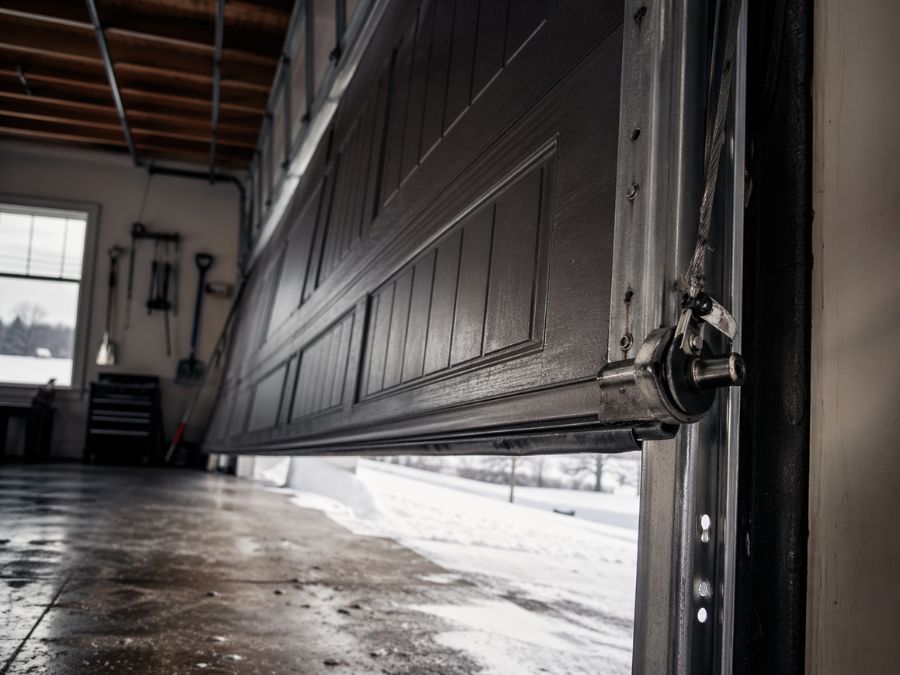
What Should I Do If My Garage Door Comes Off Track in Rockville, MN?
Quick Answer:
If your garage door comes off track in Rockville, MN, stop using it immediately. Do not try to force it open or closed. Disconnect power to the opener, keep people clear of the area, and avoid touching cables or springs. An off-track door is unstable and can cause serious injury or further damage if handled incorrectly. The safest next step is to have the system properly realigned and inspected before using it again.
Understanding the Risks of an Off-Track Garage Door
Your garage door isn’t something that can “kind of” work. When it comes off track, you’re dealing with a heavy, tension-loaded system that’s now out of alignment and unpredictable. Around Rockville, I see this happen more often than people expect, especially during that stretch between muddy spring thaw and the deep freeze of January, when everything from moisture to metal movement starts working against you.
It might happen pulling into a driveway just off Highway 23 after a long commute, or out in Rockville Township when a trailer or piece of equipment doesn’t clear the opening by an inch. Either way, once a door comes off track, the priority is simple. Don’t make it worse, don’t put yourself at risk, and stabilize the situation until it’s properly corrected.
Early Warning Signs Your Garage Door Is About to Come Off Track
Most off-track situations don’t start with a sudden failure. The door usually gives you signals first, especially in a climate like Rockville, where temperature swings and daily use put extra stress on the system.
You might notice the door getting louder than usual, particularly during cold mornings. It may hesitate or catch at a certain point in its travel, or look slightly uneven as it closes. In some cases, the movement just doesn’t feel as smooth as it used to.
In Rockville winters, small alignment issues don’t stay small for long. Catching these signs early is often the difference between a quick adjustment and a full off-track situation.
Stop Using the Door Immediately
The moment a door comes off track, even slightly, it’s no longer moving the way it was engineered to. Every time you try to open or close it, you’re forcing weight through a system that’s already misaligned.
I’ve seen this play out in newer neighborhoods like Eaglewood and Grand View Estates, where large insulated steel doors are standard. These doors are heavier, often wider, and under more load than older single-car setups. Once something shifts, that weight doesn’t forgive mistakes.
Trying to “run it one more time” is usually what turns a simple issue into bent tracks or damaged panels.
What “Off Track” Really Looks Like
Not every off-track situation is dramatic. Sometimes the rollers are completely out, but more often it starts subtly.
The door might look slightly crooked when closing, or one side may sit lower than the other. You might hear grinding instead of smooth movement, or feel the door hesitate at a certain point in its travel. In Rockville, especially during colder months, these small signs often show up before a full failure.
In neighborhoods near the Sauk River or the Mill Pond area, where moisture hangs in the air longer, those early signs tend to show up faster due to corrosion and resistance in the system.
Why Garage Doors Come Off Track in Rockville
There’s always a cause, and here, local conditions play a big role.
During the transition from mud season into colder months, debris, moisture, and shifting ground conditions can all affect how a door tracks. Dirt and grit get into the system, especially in rural driveways and properties around the Hidden Valleys or Rockville Township. Then winter hits, and everything tightens.
When temperatures drop into the deep freeze, metal contracts. Tracks narrow just enough that rollers don’t glide the way they should. That resistance builds until the system binds, and eventually a roller can jump track.
Usage patterns add to it. In Rockville, the garage isn’t just a place to park. It’s the main entry point, especially when snow piles up and front walkways become less practical. That means the door cycles constantly, sometimes ten or more times a day through winter.
Then there’s what I see all the time in township properties and larger lots. The garage doubles as a working space, and beyond that, many properties have detached pole sheds or hobby shops. Between vehicles, trailers, boats, and equipment moving in and out, it only takes one misalignment or one object sitting slightly too far forward.
A trailer hitch catching the bottom section is one of the most common causes of an off-track door. It doesn’t take much force. Just enough to bend the panel and shift the rollers out of alignment.
Environmental factors finish the job. Near the Granite Quarry District, fine dust settles into tracks and mixes with lubricant, forming a gritty compound that wears rollers unevenly. Closer to the river, humidity contributes to rust on springs and hardware, which increases resistance and throws off smooth movement.
What You Should Do Right Away
If your garage door is off track, the safest move is to slow everything down and avoid reacting too quickly.
Step 1: Leave the door where it is
If it’s halfway open, forcing it down can cause a full system failure. If it’s closed, that’s the most stable position and it should stay there.
Step 2: Disconnect power to the opener
This prevents the system from cycling again, especially in households where multiple people use remotes or wall controls. An opener will continue pushing even when something is wrong, and that’s where additional damage happens.
Step 3: Visually assess from a distance
You’re not fixing anything. You’re simply looking for obvious signs like a roller out of place, a bent track, or a cable that looks uneven. If anything involving cables looks off, that’s your signal to stop and leave it alone.
Step 4: Keep the area clear
An off-track door is unstable, and if something shifts, it can drop or twist unexpectedly. Treat it like a suspended load.
What Not to Do With an Off-Track Garage Door
This is where things often go sideways. Trying to bend a track back into place might seem like a quick fix, but tracks need to be aligned precisely. Once they’re compromised, they rarely return to their original shape in a way that holds long-term.
Forcing the door closed is another mistake I see, especially when someone just wants to secure the garage. When the system is out of alignment, pushing it down can twist panels and pull cables unevenly. That turns a correctable issue into a much larger repair.
Resetting rollers without the proper process is also risky. It often requires loosening hardware or dealing with spring tension. Without the right approach, that’s not something you want to experiment with.
And then there are the springs and cables. These components are under significant tension. If something has already shifted, adjusting them without proper control can lead to a sudden release of force.
Why This Happens More in Certain Rockville Homes
Different parts of Rockville create different stress points for garage doors. In older areas near Broadway Street or the original town center, you’ll often find aging systems paired with narrower or less reinforced tracks. These setups are more prone to wear-related alignment issues.
In newer developments like Eaglewood or Grand View Estates, garages tend to be front-facing with large, insulated carriage-style doors. Darker finishes and decorative paneling look great, but they also mean heavier sections and more surface area, which increases stress on the system when something goes wrong.
Out in Rockville Township, where hobby shops and detached pole sheds are common, usage is simply higher. Doors are opened more frequently and used for more than just daily commuting. That additional activity increases wear across the entire system.
The Cost of Waiting Too Long
An off-track door rarely stays a small problem. What looks like a minor alignment issue at first usually means something in the system has already started to fail.
As the door continues to be used, that misalignment spreads. Rollers wear down faster because they’re no longer tracking cleanly. The tracks themselves can begin to bend or widen under uneven pressure. Cables start to take on more load than they should, which leads to fraying or stretching over time.
At the same time, the opener is forced to work harder to move a door that’s no longer balanced. That added strain can shorten its lifespan or cause internal components to fail prematurely.
In Rockville, this process tends to accelerate. Between heavy daily use, temperature swings from mud season into the deep freeze, and environmental factors like dust and moisture, small issues don’t sit still—they compound quickly.
What could have been a focused repair often turns into multiple components needing attention. More parts, more labor, and more downtime. Waiting doesn’t just delay the fix—it increases the scope of the problem and the cost that comes with it.
A Contractor’s Perspective
In most cases, the door didn’t fail out of nowhere. It was giving signals.
Maybe it got louder over time, especially during cold mornings. Maybe it hesitated slightly when opening after sitting overnight. Maybe it looked just a little uneven coming down.
Those small signs matter more here than people think. Between the dust, moisture, temperature swings, and heavy use, small issues don’t stay small for long.
Bottom Line
If your garage door comes off track, the safest move is always to stop using it and avoid trying to force it back into place.
Stabilize the situation, keep your distance from any tension-loaded components, and make sure the system is properly realigned before putting it back into operation.